
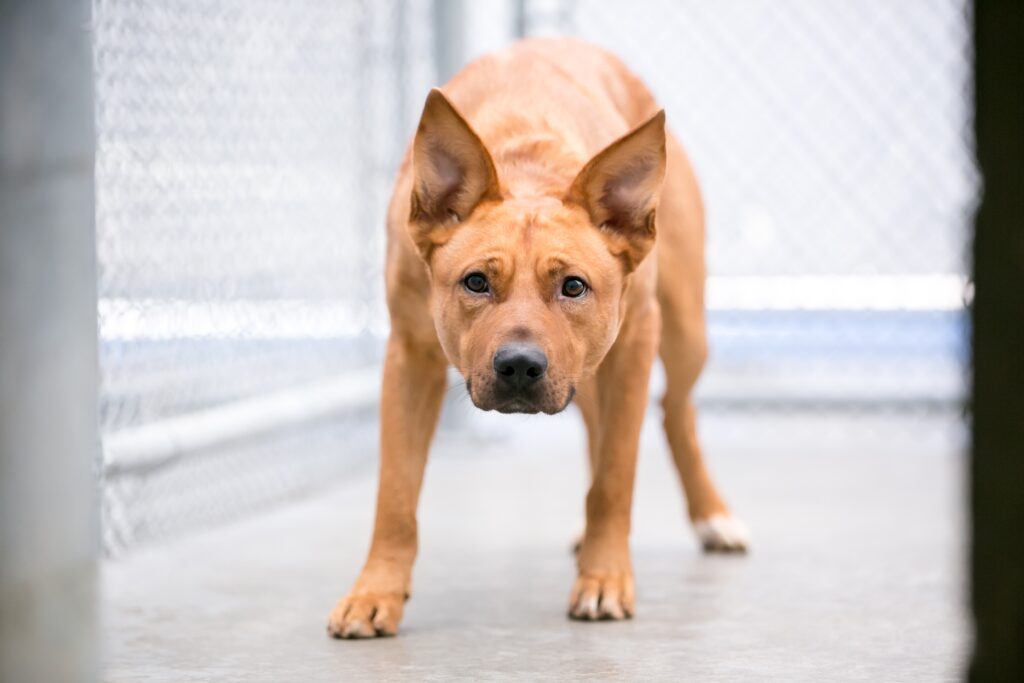
Dog Body Language Chart: How to Read Every Signal Your Dog Sends
Your dog is talking to you right now. Every flick of an ear, shift in weight, and change in tail speed carries meaning, and this dog body language chart gives you the exact signals to watch for so you can catch what your dog is saying before a bark or bite ever becomes necessary. Learning this language turns confusing moments into clear ones, and it’s one of the fastest ways to build a calmer, more trusting relationship with the dog in front of you.
What Your Dog’s Body Language Actually Tells You
Six areas of your dog’s body work together to broadcast their emotional state: eyes, ears, mouth, tail, posture, and coat. None of these signals should be read alone. A stiff tail paired with soft eyes means something entirely different than the same stiff tail paired with a hard stare and raised hackles, so the real skill lies in reading all six areas together as one message.
Did You Know?
A study analyzing 33 different dog breeds found that five specific body language cues directly predict high training success: wide-open eyes focused on the handler, a closed mouth, forward-turned ears, a high tail, and a tail that is either held still or wagging in short, quick bursts.
Source: Azabu University Study on Canine Learning & Body Posture
Why Reading These Signals Changes Everything
Fluency in dog body language reshapes daily life with your dog in five concrete ways.
1. It Prevents Problems Before They Start
Every growl or snap is preceded by quieter warnings. Catching a whale eye or a stiffened body early gives you the window to redirect your dog before frustration turns into a reaction.
2. It Builds Trust
Responding correctly to a stress signal shows your dog that you notice their discomfort and act on it. That responsiveness is what turns a working relationship into a trusting one.
3. It Strengthens Your Bond
Clear communication runs in both directions. Once you understand what your dog is telling you, you naturally become more attuned to their needs, and the relationship deepens as a result.
4. It Keeps Everyone Safe
Knowing when your dog is comfortable around new people, dogs, or environments lets you make smarter calls about when to engage and when to create space.
5. It Sharpens Your Training
A dog who looks confused, stressed, or checked out during a session needs a different approach than a dog who is simply distracted. Reading their state in real time lets you adjust before frustration sets in on either end of the leash.
BlackPaw’s Dog Body Language Chart
Here’s the full breakdown of what to look for in each emotional state, organized by body part so you can scan it fast in the moment.
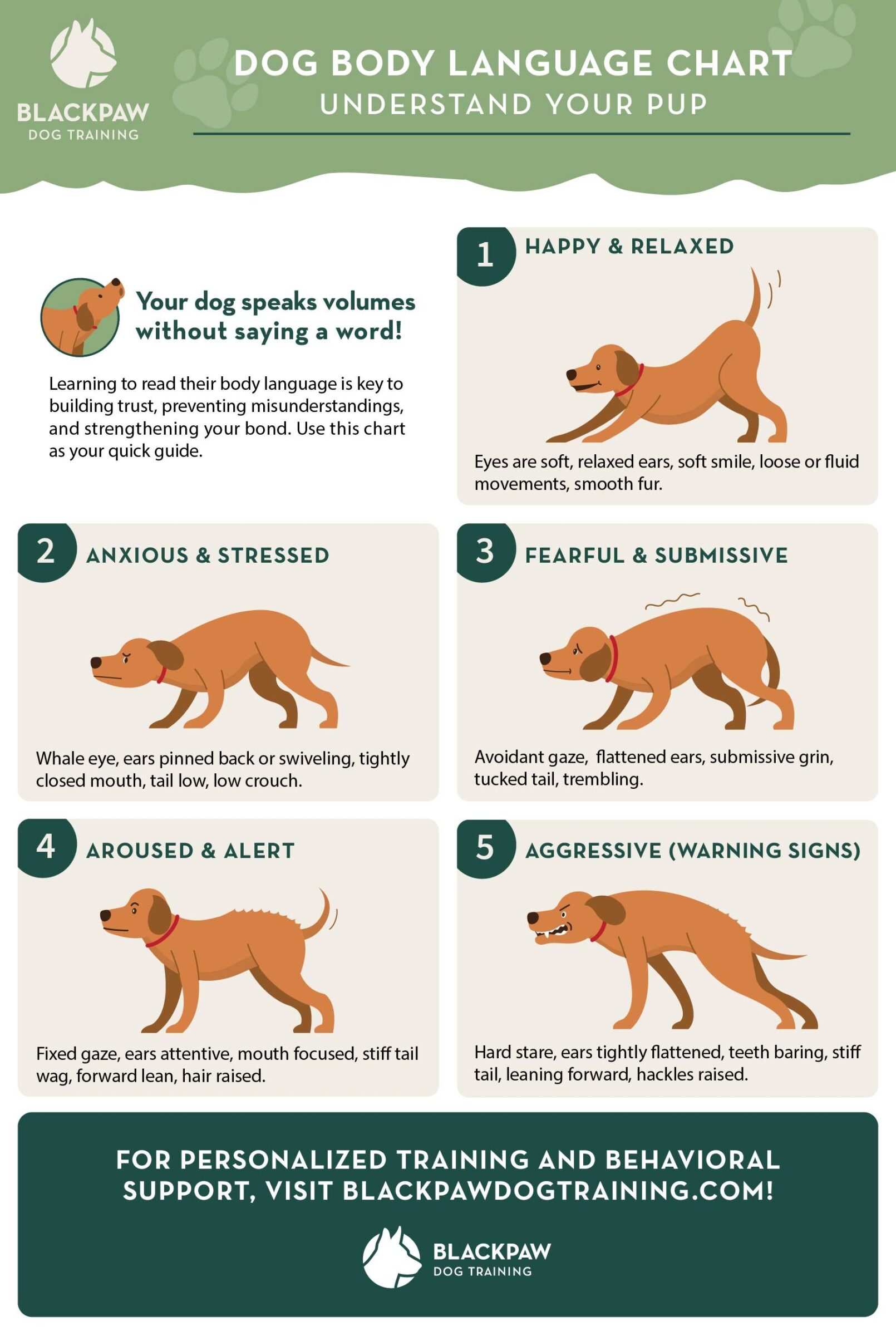
Relaxed and Happy
A relaxed dog moves loosely, with no tension held anywhere in the body. Weight sits evenly distributed, breathing stays easy, and every part of them looks soft.
| Body Part | What You’ll See |
|---|---|
| Eyes | Soft, almond-shaped, with a gentle, unfixed gaze and normal-sized pupils |
| Ears | Natural, breed-appropriate position, loose or slightly to the side |
| Mouth | Closed or softly open, often with a relaxed “soft smile” and no lip-licking |
| Tail | Neutral position or a loose, sweeping wag that involves the whole body |
| Posture | Loose and fluid, weight evenly distributed, no rigidity |
| Coat | Lies smooth, with no raised hackles along the spine |
Anxious and Stressed
Stress signals show up as small, easy-to-miss shifts long before a dog reacts outwardly. Spotting them early gives you the chance to lower the pressure before your dog feels the need to escalate.
| Body Part | What You’ll See |
|---|---|
| Eyes | “Whale eye” (whites visible), wide or darting, dilated pupils |
| Ears | Flattened, pulled back, or swiveling rapidly to track sound |
| Mouth | Tightly closed, excessive panting, repeated lip-licking, out-of-context yawning, drooling |
| Tail | Tucked low and stiff, or a low, rapid wag that feels tense rather than loose |
| Posture | Crouching, leaning away, pacing, or trembling |
| Coat | Hackles raised along the neck and shoulders |
Fearful and Submissive
A fearful dog is actively trying to de-escalate a situation they perceive as threatening, and these signals often intensify during a dog’s fear periods. Keep an eye out for the following body signals to know when it’s time to back off and let your dog calm down.
| Body Part | What You’ll See |
|---|---|
| Eyes | Avoids direct eye contact, looks away, squints, shifty gaze |
| Ears | Flattened tightly against the head and pulled back |
| Mouth | Closed and tight, lip-licking, yawning, a “submissive grin,” drooling |
| Tail | Tucked tightly between the legs, or a very low, slow, tense wag |
| Posture | Crouching low, making themselves small, rolling onto the back, trembling, occasional urination |
| Coat | Hackles possible when fear combines with arousal |
Aroused and Alert
An alert dog has locked onto something in the environment, and that focus can tip toward play or toward conflict depending on what happens next.
| Body Part | What You’ll See |
|---|---|
| Eyes | Fixed, intense gaze with dilated pupils |
| Ears | Pricked forward, highly attentive, swiveling to pinpoint sound |
| Mouth | Closed or slightly open, occasionally a subtle lip curl |
| Tail | Held high and stiff, often a rapid, flag-like wag |
| Posture | Rigid, leaning forward, momentarily frozen while processing |
| Coat | Hackles common with heightened arousal |
Aggressive (Warning Signs)
These signals are a serious request to stop and reassess. If your dog is showing these signs consistently, particularly when the root cause is fear, working with a fear-aggression training specialist should happen right away.
| Body Part | What You’ll See |
|---|---|
| Eyes | Hard, fixed stare with constricted pupils |
| Ears | Stiffly forward (offensive aggression) or flattened back (fear aggression) |
| Mouth | Lips curled into a snarl, growling, a low guttural bark, snapping |
| Tail | Held high and stiff with a rapid, low-amplitude wag, or tucked tight if fear is driving it |
| Posture | Stiff and rigid, leaning forward or standing tall, lunging or freezing before a lunge |
| Coat | Hackles raised along the entire spine |
Early Stress Signals Dogs Show Before They Escalate
Long before growling or snapping, dogs use small, low-level behaviors called displacement signals to cope with discomfort. Watch for a yawn with no reason to be tired, a quick tongue flick or nose lick, sudden scratching, or a full-body shake-off in a dog who isn’t wet.
| Displacement Behavior | What It Signals |
|---|---|
| Yawning out of context | Internal stress or an attempt to self-soothe |
| Lip or nose licking | Discomfort with a person, dog, or situation |
| Unprompted scratching | Displaced anxiety or conflict avoidance |
| Shaking off (dry) | Releasing built-up tension after a stressful moment |
Most guidance stops at telling you to notice these cues and step back. Our trainers, drawing on Bernadette Pflug’s Search & Rescue background, take it a step further and actively work the moment your dog is in. Using the E-touch & Force Free Method™, handlers break a dog’s fixation on whatever triggered the stress response and des, turning a warning sign into a training opportunity instead of a retreat.
How Stress Escalates: The Ladder of Communication
Dog trainers describe stress as a ladder. Each unaddressed rung pushes a dog closer to a bite, and understanding where your dog sits on that ladder tells you exactly how urgent the situation is.
| Rung | Behavior |
| 1 | Looking away or turning the head |
| 2 | Creeping or moving away slowly |
| 3 | Stiffening the body |
| 4 | Growling |
| 5 | Snapping |
| 6 | Biting |
Knowing the ladder exists only helps if you have a way to stop your dog from climbing it. That’s the gap our Total Behavior Reboot Program is built to close. For dogs working through aggression, resource guarding, or fear-reactivity, we install functional obedience, clear structural boundaries, and an understanding of natural dog psychology so your dog has a reliable off-ramp long before reaching the higher rungs.
Reading Body Language on the Trail and in Public
Most body language guidance is written for quiet living rooms, but Colorado life happens on trails, at breweries, and in crowded parking lots. A dog who looks perfectly relaxed at home can show a completely different set of signals once a mountain biker whips past on a narrow trail or another off-leash dog appears around a bend.
Reading arousal and tension cues in these higher-distraction settings is what makes 100% off-leash recall possible. Our Perfect Pooch Program is built around exactly this kind of real-world reliability, so your dog can hike, camp, and explore alongside you with the same calm body language they show at home.
When Body Language Signals Don’t Improve at Home
Sometimes a dog’s stress signals persist no matter how consistent the household management becomes. The environment itself, whether that’s a specific room, a recurring trigger, or the general chaos of daily life, keeps reinforcing the same reactive patterns.
This is where our Boarding School model changes the trajectory. Removing a dog from their everyday triggers and placing them in an immersive, consistent training environment, whether through Puppy Head Start, Perfect Pooch, or Total Behavior Reboot, creates the rapid, lasting shift in a dog’s inner state that home-based management alone often can’t reach.
Applying This in Real Life
Context shapes every signal your dog gives off. The same stiff tail that means alert curiosity at the dog park might mean genuine fear at the vet, so practice reading your dog across these everyday situations.
| Situation | What to Watch For |
| At the dog park | Loose, bouncy movement signals play; stiffening or fixed staring signals rising tension |
| Meeting new people | Soft eyes and a relaxed body show confidence; leaning away or lip-licking shows hesitation |
| During vet visits | Whale eye, trembling, and tucked tails flag stress your vet should know about |
| During training sessions | Engaged eyes and a loose body show focus; yawning or looking away signal confusion or overload |
Practicing this kind of observation across different environments sharpens your ability to read your dog like an open book, and that skill grows stronger every time you use it.
Understand Your Dog’s Body Language to Bring You Both Closer
Truly understanding your dog’s non-verbal cues is one of the most powerful tools you can possess as a pet owner. It’s the key to unlocking a deeper level of communication and building an unbreakable bond based on mutual respect and understanding. When you grasp the nuances of dog body language, you can anticipate your dog’s needs, recognize early signs of stress or discomfort, and celebrate their joy and contentment with greater clarity. This knowledge empowers you to be a more responsive, empathetic, and effective companion.
Ultimately, investing time in understanding body language in dogs leads to a more harmonious household. It allows you to intervene before small anxieties become big problems, prevent misunderstandings that could lead to fear or frustration, and ensure your dog feels truly seen and heard. This level of insight helps create a more confident, well-adjusted, and happy canine companion.
Here’s What to Know About Intensive Dog Training and Boarding
Book With BlackPaw Dog Training Today
If specific behavioral concerns keep showing up despite your best efforts, our team is ready to help. Explore our Perfect Pooch Program for off-leash reliability and public confidence, or our Total Behavior Reboot for more serious behavioral rehabilitation. We also offer E-collar training for dogs for precision control in high-distraction environments.
Learn more about our full approach on our Intensive Dog Training and Boarding page, or contact us today to start strengthening your bond through clear communication and effective, balanced training.