

Does Wildfire Smoke Affect Dogs?
If you have spent a summer along the Front Range, you already know the drill. The sky turns that hazy orange-gray, the air quality alerts start buzzing on your phone, and you find yourself wondering: does wildfire smoke affect dogs the same way it affects us? The answer is yes, and in some cases, dogs feel the effects even before their owners notice a change. Their noses work overtime, their lungs are smaller relative to their size, and they cannot tell you when their chest feels tight or their eyes are burning.
For Colorado dog owners, wildfire smoke is a recurring part of life, especially for families who built their routines around hiking, camping, and long days outside with their dogs. This guide covers the physical warning signs every owner should know, the dogs most at risk, and the training-based strategies that go beyond basic advice like closing your windows. With the right preparation, smoke season does not have to mean weeks of stress for you or your dog.
What Wildfire Smoke Does to Your Dog’s Body
Smoke exposure irritates a dog’s respiratory system in much the same way it irritates ours, but dogs often show discomfort through behavior before they show it through obvious physical distress. Watching for early signs gives you a head start on protecting your dog before a mild irritation turns into a bigger health concern.
5 Warning Signs of Smoke Exposure
- Persistent coughing or gagging. A dog trying to clear smoke particles from their airway will often cough repeatedly or make a gagging motion, especially after time spent outdoors.
- Eye irritation. Redness, squinting, or excessive tearing are common signs that smoke particles have settled into a dog’s eyes.
- Nasal discharge. A runny or crusty nose that shows up during a smoke event, rather than as part of a cold, points to airway irritation.
- Rapid resting respiration rate. A healthy dog at rest typically breathes between 15 and 30 breaths per minute. A noticeably faster rate while lying down and relaxed can signal that the lungs are working harder than they should.
- Lethargy or reduced appetite. Dogs who feel unwell from smoke inhalation often become quieter, less interested in play, and less interested in food.
If you notice any of these signs, move your dog indoors and monitor them closely. Symptoms that worsen or do not improve once air quality clears warrant a call to your veterinarian.
Why Some Dogs Face Higher Risk During Smoke Season
Not every dog responds to smoke exposure the same way. Puppies and senior dogs have less resilient respiratory systems, which means irritation can escalate faster and take longer to resolve. Pregnant dogs face added strain on their cardiovascular system, making smoke exposure riskier for both mother and pups.
Brachycephalic breeds, which is just a fancy way of describing dogs with a shortened muzzle (think: Bulldogs, Pugs, and Shih Tzus), carry an added disadvantage because of their shortened airways. These dogs already work harder to breathe under normal conditions, so smoke particles create a bigger obstacle. High-drive working breeds common here in Colorado, like German Shepherds, Australian Shepherds, and Labs, are not more physically vulnerable to smoke itself, but their need for daily exertion creates a different kind of risk. When outdoor activity gets cut off during a multi-day air quality alert, that pent-up energy has to go somewhere, and it often shows up as anxiety or destructive behavior indoors.
Who Needs a Smoke Season Plan Most
If your household includes an active, high-energy dog who is used to daily hikes, trail runs, or off-leash time, smoke season hits your routine the hardest. The dogs who benefit most from a real plan are the ones whose owners have built a life around the outdoors, precisely the families we work with every day at BlackPaw Dog Training. Families with young children, multiple dogs, or dogs already prone to anxiety also have more at stake when smoke forces sudden changes to the household routine.
Managing Your Home’s Air Quality
Before addressing behavior, the basics of air quality management still matter. Close your windows and doors as soon as an air quality alert is issued and switch your air conditioning to recirculation mode so you are not pulling smoky outdoor air inside. A HEPA air purifier, run continuously in the rooms your dog spends the most time in, makes a meaningful difference in the particles they breathe indoors.
These steps protect your dog’s lungs, but they leave three bigger questions unanswered. What do you do with a restless, high-energy dog once they have been stuck inside for days? How does your dog actually behave if you need to evacuate in a hurry? And what happens emotionally when a dog gets shut into an unfamiliar room to keep them away from the smoke? These are the questions most wildfire advice skips entirely, and they are exactly where training makes the difference.
Real Training Solutions for Smoke Season Challenges
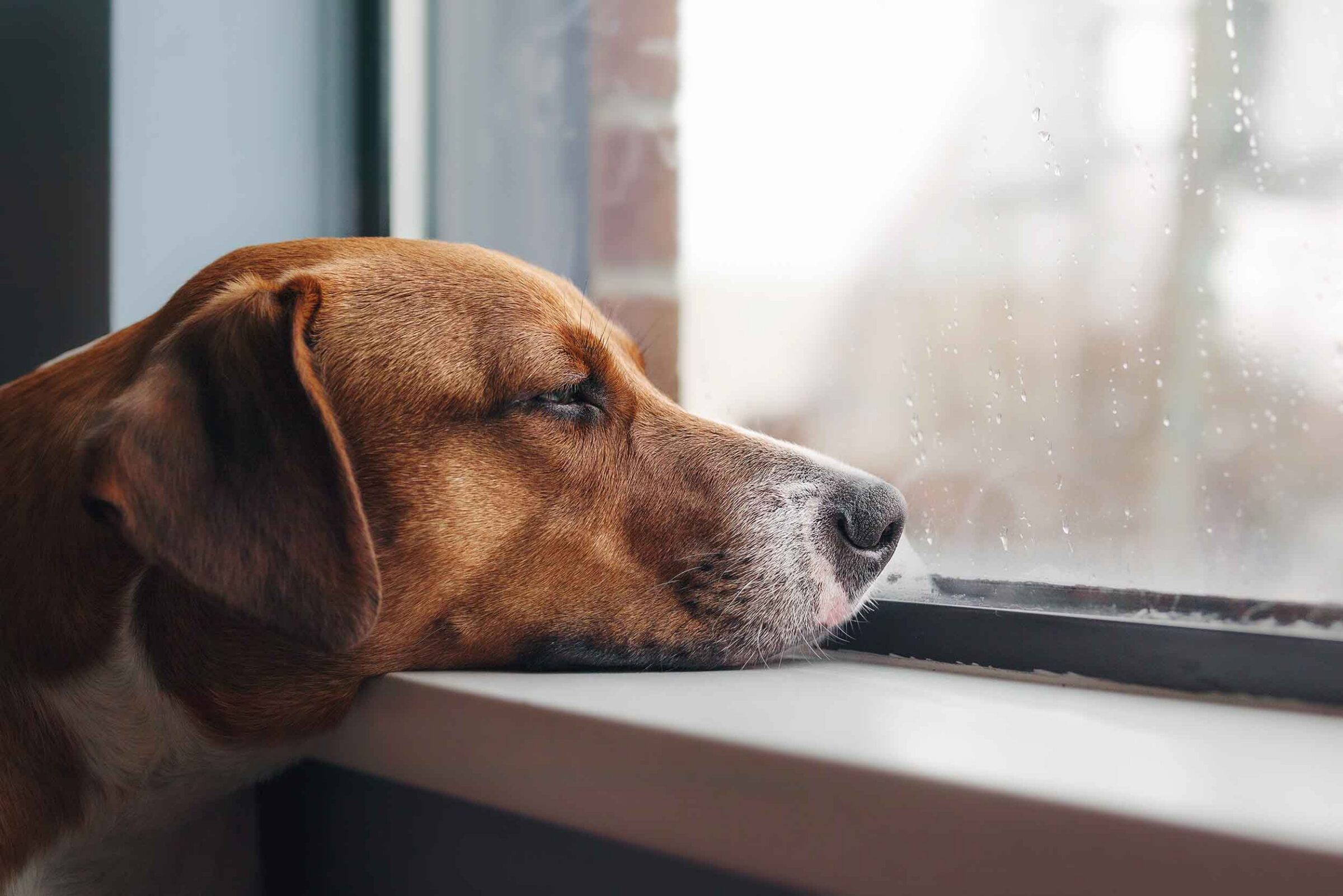
Preparing for smoke season means training your dog to handle the parts of a smoke event that catch most owners off guard: staying occupied during days of confinement, loading calmly into a vehicle if evacuation becomes necessary, and settling into a crate or closed room without spiraling into panic. The sections below walk through how BlackPaw Dog Training’s programs address each of these pieces directly.
Keeping a High-Energy Dog Occupied When You Can’t Go Outside
When an air quality alert keeps your dog indoors for several days in a row, the energy that would normally get burned off on a trail or a run builds up fast. While puzzle feeders, lick mats, and long-lasting chews have their place, they are a short-term patch for a longer-term problem. A dog used to burning energy on the trail will not settle just because you handed them a treat, and without a real outlet, that pent-up energy tends to surface as pacing, whining, or destructive chewing.
Pro Tip: When air quality is poor and heat is intense, instead of letting your dog lounge in the backyard, have them relax indoors. Keep outdoor walks shorter and consider indoors walks at dog friendly stores like most hardware or farm stores, and pet stores.
Our balanced training philosophy focuses on teaching dogs a genuine indoor off-switch. We build this through structured place-stays, where a dog learns to hold a calm, settled position for extended periods, regardless of what is happening around them. We pair this with crate conditioning that reinforces calmness as a dog’s default state. Indoor loose-leash practice rounds this out, giving working breeds a structured mental task even when a trail hike is off the table. The goal is a dog who can self-regulate, so confinement during a smoke event feels manageable rather than agitating for everyone in the house.
How to Evacuate Your Dog Without the Panic
Most wildfire preparedness advice for pet owners stops at packing a kit, keeping vaccination records handy, and confirming your dog’s microchip information is current. These steps matter, and every Colorado household should have them covered. But they miss the part that actually determines whether an evacuation goes smoothly: How your dog behaves in the middle of it.
My 10+ years as a Search & Rescue handler taught me firsthand what happens to a dog’s mind under real adrenaline, whether that is a search deployment or a chaotic evacuation with sirens, neighbors, and headlights everywhere. A dog who only knows commands in calm, quiet settings often cannot access that same obedience once stress hormones take over. This is why our Perfect Pooch and Total Behavior Reboot programs train functional obedience under distraction, not just in a controlled backyard.
Commands like “place” & “crate,” and rapid vehicle loading need to be practiced until they hold up under real pressure, not just during a calm Tuesday afternoon training session. We teach threshold control so a dog learns to check in with their handler and wait for direction, even when their instincts are telling them to bolt or freeze. That threshold control is what keeps a dog task-focused and loadable into a car in under a minute, rather than frozen in fear while smoke rolls closer.
Turning a Crate into a Safe Space During Confinement
A common piece of advice during smoke events is to move dogs into a closed room with an air purifier to limit their exposure. What this advice overlooks is what happens to a dog emotionally when they are suddenly isolated in an unfamiliar space. For a dog with any tendency toward separation anxiety, sudden confinement in an enclosed room can trigger barrier frustration, panic, and even self-injury.
Our Total Behavior Reboot program was built specifically to rehabilitate severe separation anxiety and barrier frustration, and the same principles apply here. Structured kennel training paired with balanced boundaries teaches a dog that a crate or a closed room is a place of safety, not a punishment or a source of panic. My own German Shepherd, Ranger, struggled with severe separation anxiety before this same structured approach helped him transition into a calm, focused Search & Rescue partner. If Ranger could learn to find peace in confinement, most family dogs can too, with the right guidance and consistency.
Tackling Smoke Season Together
Excessive barking, fighting with other dogs, and separation anxiety often trace back to the same root causes: fear, poor socialization, or unresolved trauma. Wildfire smoke season adds another layer to this, forcing dogs into sudden confinement and disrupted routines that can bring these underlying issues to the surface. A dog who already struggles with anxiety or a lack of impulse control will feel the strain of a smoke event more acutely than a dog who has a strong foundation of obedience and calm-state conditioning.
This is why we look at smoke season preparation as an extension of the same work we do every day at BlackPaw Dog Training. Teaching a dog to hold a place-stay, load calmly into a vehicle, or settle in a crate is useful well beyond hiking trips and houseguests. It gives your dog the tools to handle a genuine emergency with far less fear, and it gives you the peace of mind that comes from knowing your dog can handle whatever the Colorado sky throws at your family next.
Wildfire Smoke Affects Dogs More Than Just in Their Lungs
Does wildfire smoke affect dogs? Absolutely, and the effects go beyond a cough or watery eyes. Extended smoke events test a dog’s physical resilience and their emotional stability, especially for active, high-drive dogs used to a full calendar of outdoor adventures. Closing your windows and running an air purifier is a good start, but real preparation means training your dog to stay calm under pressure, settle indoors without a fight, and evacuate quickly if the situation calls for it.
At BlackPaw Dog Training, we bring Search & Rescue-tested experience to every part of this process, from indoor conditioning to evacuation readiness. If you want your dog prepared for whatever this Colorado summer brings, reach out to our team to talk through a training plan built around your dog’s specific needs.