
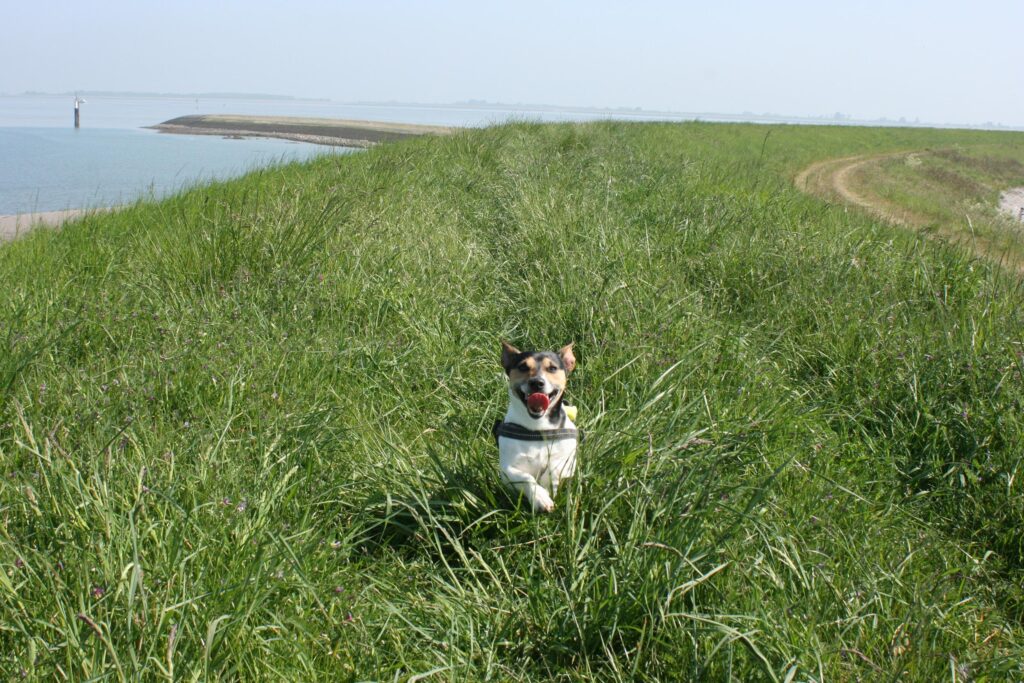
The Flatirons offer an unparalleled playground for our canine companions. Unlocking thousands of acres within the Boulder Open Space and Mountain Parks (OSMP) for off-leash exploration represents the ultimate goal for many local dog owners. High-mileage roaming provides significant physical and mental benefits that a standard neighborhood walk cannot match, but it calls for excellent off-leash dog training.
This level of freedom involves high stakes. Boulder maintains rigid legal requirements through the Voice and Sight Program, which demands mandatory education, specific licensing, and adherence to strict behavioral standards. Local terrain is also environmentally volatile. Success requires managing high-speed mountain bikes, rattlesnakes, black bears, and the tricky acoustics of steep canyons. Achieving true off-leash reliability means integrating fundamental recall mechanics with mountain etiquette. A disciplined approach is the only way to maintain lifelong trail access.
Why is Off-Leash Training so Important in Boulder?
Successful off-leash dog training in Boulder is a deliberate result that comes from building a mental tether that functions even when the physical leash is removed. The key to achieving a perfectly obedient pooch is to slowly build recall skills while consistently reinforcing positive behavior.
Incremental Recall Mastery
Building a rock-solid foundation begins in low-distraction environments. Training should start in the living room and progress to the backyard before moving to a dog-friendly hiking trail. A successful strategy involves associating the “Come” command with premium rewards like high-value treats or favorite toys. It is important to avoid using a recall command for activities a dog might dislike, such as baths or nail trims. During the transition to full freedom, long-line (fifteen to thirty feet) allows a dog to feel a sense of independence while the handler maintains the ability to stop a lapse in judgment.
Radius Training and Check-In Culture
Reliability involves a dog choosing to stay connected to the handler. When a dog looks back without a cue, that moment should be marked with a verbal “Yes” and a reward. Establishing a distance boundary is equally vital. A dog must learn to wait or return once they hit a specific perimeter, typically twenty to thirty feet in mountain terrain. Consistent verbal markers should be used the instant a check-in occurs to reinforce this vital mental connection.
The Boulder Voice and Sight Program
To hike off-leash legally in Boulder, both owner and pup must master the city’s specific regulatory requirements. This is a privilege earned through consistent compliance. The city expects a high level of performance from off-leash dogs to ensure the trails remain a welcoming place for everyone. Understanding these rules is the first step toward achieving the Freedom Through Training that we champion at BlackPaw.
Passing the OSMP Standards
City Rangers monitor trails to verify that dogs do not engage in specific prohibited behaviors, such as charging at people or other animals, chasing wildlife, and displaying aggression toward other dogs. Failure to stay within the guardian’s sight and immediate voice control is also a violation. The sight mandate is particularly important in Colorado, and a dog must remain visible at all times, even when navigating dense brush or sharp switchbacks.
The Compliance Checklist
Obtaining a Green Tag involves several logistical steps. Owners must complete the City of Boulder online course, a requirement that repeats every five years. Current city dog licenses and proof of up-to-date Rabies certification are also required. Registration occurs through a DocuPet account, with fees varying based on residency. Once obtained, the Voice and Sight tag must be prominently displayed on the dog’s collar alongside their identification and Rabies tags.
Managing Mountain Distractions
Boulder presents a unique hierarchy of distractions that generic training programs often fail to address. From the high-prey drive triggers of local wildlife to the fast-paced movement of mountain athletes, the Flatirons require a dog to have an advanced level of impulse control. Completing off-leash dog training for these specific scenarios ensures that your mountain adventures remain peaceful and safe for your furry crew member.

The Boulder Distraction Hierarchy
In our local mountain parks, distractions are not all created equal. We categorize these challenges into a specific hierarchy to help owners understand where their dog might struggle. Mastering these levels is the key to maintaining a safe and balanced mindset on the trail.
Level One: High Speed Movement
Moving objects like high-speed mountain bikers on multi-use trails and professional runners in the Flatirons represent the first level of challenge. These triggers often activate a dog’s natural urge to chase or bark in surprise.
Level Two: Prey Drive Triggers
High-prey drive scenarios are a significant hurdle for many breeds. A mountain-ready dog must be able to disengage from a mule deer mid-chase and return to the handler immediately.
Level Three: Predators and Environmental Dangers
The most vital level of training involves high-risk encounters. Specific drills are necessary to ensure a dog can ignore black bears, rattlesnakes, and mountain lions. In these moments, a fast and reliable response is a life-saving necessity.
Technical Gear for Rugged Geography
The steep ridges and canyons of our region can cause standard verbal commands to be drowned out by wind or echoes. A high-decibel whistle provides an acoustic solution, as its sharp pitch cuts through canyon wind more effectively than the human voice. For dogs with high prey drive, satellite-based tracking systems should be utilized. Many of the best local trails lack cell service, rendering standard Bluetooth trackers ineffective.
Trail Stewardship and Shared Space
The future of off-leash access in Boulder depends on how dog owners interact with the community. Proper etiquette reduces friction between dog owners and other trail users. By projecting a voice of competence and respect on the trail, we protect the privileges of the entire dog-owning community. Being a good neighbor in the wilderness is just as important as being one in your Denver or Boulder neighborhood.
Yielding and Social Friction
The universal rule of the trail is that dogs and owners must yield to horses and hikers. It is standard etiquette that uphill traffic always has the right of way, so you should step aside early to allow others to pass comfortably. Proactive leashing is a sign of respect that prevents unnecessary tension before it starts. For instance, if you see a hiker or a horse that appears uncomfortable with a dog, leashing your furry companion immediately shows that you have full operational control.
Preservation of Privileges
Being a trail steward involves practicing kindness and communicating clearly with mountain bikers and other users. A simple confirmation that a dog is under control goes a long way toward maintaining community rights. Our commitment to the land also means we must protect the sensitive ecosystem. We urge every owner to be a responsible partner by packing out all waste to keep our Colorado trails pristine for future generations.
The Value of Off-Leash Dog Training in Boulder
Investing in elite off-leash dog training provides freedom and legal peace of mind. It eliminates the risk of fines or tag revocation while providing operational control in high-stress environments. High-quality training delivers several key advantages for you and your furry companion.
- Legal access to thousands of acres within the Boulder Open Space and Mountain Parks.
- Compliance with city regulations to avoid costly fines or tag revocation.
- Protection for your dog against local environmental threats like rattlesnakes and black bears.
- Significant enrichment that surpasses a standard neighborhood walk.
- Preservation of trail access for the entire Colorado dog owning community.
If a dog’s recall fails when a deer bolts or a mountain bike zips past, specialized programs can help. One of the best ways to start the journey toward becoming a local authority on the trails is by investing in obedience. Our dog training programs are designed to take dogs from a state of distraction to being mountain-ready in a matter of weeks.